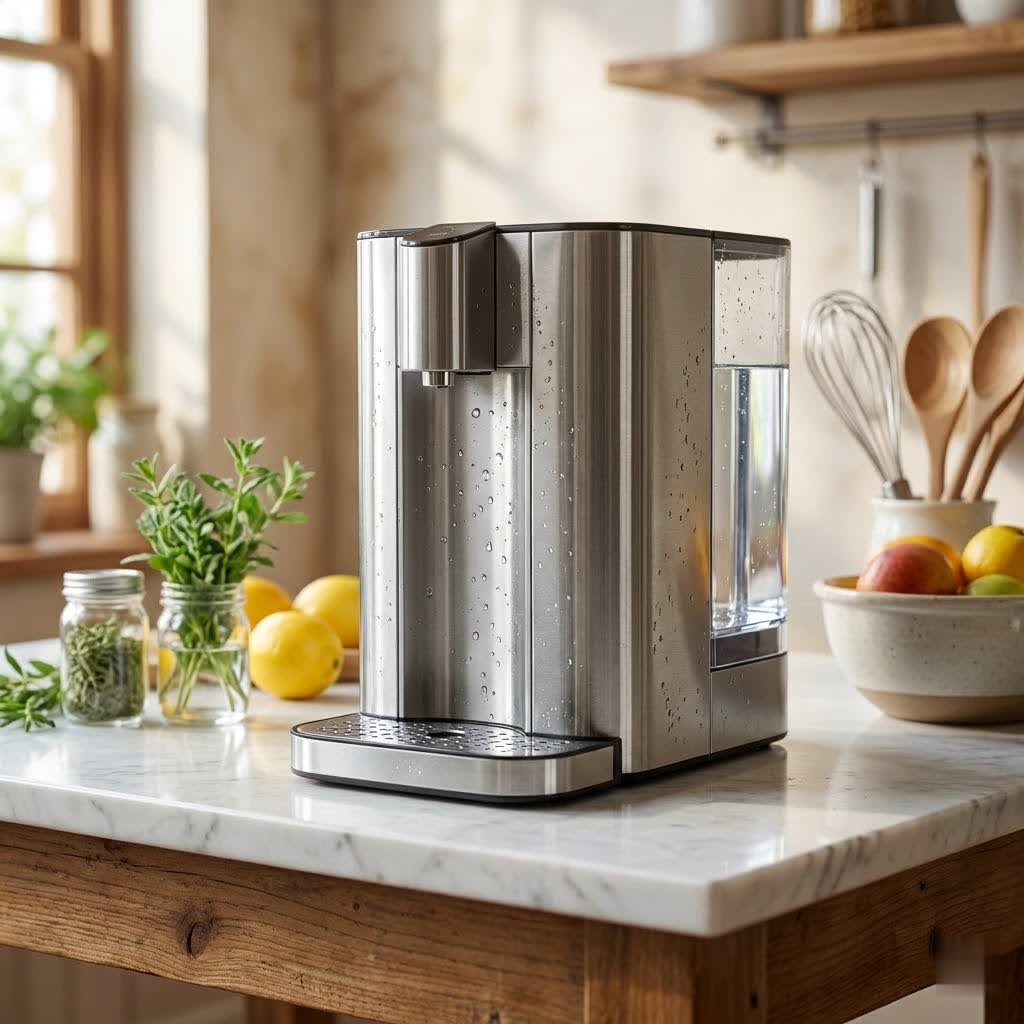
In an era where water quality is a growing concern, finding a reliable solution for clean drinking water in your home is more vital than ever. You might be questioning the purity of your tap water, wondering about unseen contaminants, and searching for a system that truly delivers peace of mind. The eSpring Water Purifier, a globally recognized leader in home water treatment, offers a sophisticated answer to these challenges. This article will explore its innovative technology, certified performance, and how it stands as a cornerstone for healthier hydration.
Popular Water Purifier Types and Where eSpring Stands Out
The market is filled with various water purification technologies, each with its own approach to removing impurities. Common types include activated carbon filters, ultraviolet (UV) purifiers, reverse osmosis (RO) systems, ultrafiltration (UF), and nanofiltration. While each offers benefits, they often specialize in certain types of contaminant removal, leaving gaps in comprehensive protection. For more home guides on this site.
Basic carbon filters excel at improving taste and odor by removing chlorine, but they typically don’t address microscopic organisms like bacteria and viruses. UV purifiers are effective against microorganisms but don’t filter out particulate matter, chemicals, or heavy metals. Reverse osmosis systems, known for their thorough contaminant removal, can also strip beneficial minerals from the water and generate significant wastewater.
The eSpring Water Purifier distinguishes itself by integrating a multi-stage activated carbon block filter with a powerful UV-C LED disinfection system (or a UV lamp in previous models). This synergistic approach ensures broad-spectrum contaminant reduction without removing the healthy minerals naturally present in your water. It provides a more complete solution than single-technology systems and offers a balance between comprehensive purification and mineral retention that RO systems often lack.
eSpring’s Advanced Filtration Technology Explained
At the heart of the eSpring Water Purifier’s exceptional performance lies its modern, two-stage purification process. This combination targets a wide array of contaminants, ensuring that the water flowing into your glass is both clean and refreshing.
The Power of the e3 Carbon Filter
The eSpring system features an advanced multi-layer e3 Carbon Filter, meticulously engineered to reduce numerous impurities. This robust filter effectively traps larger particles like sediment and dirt with its pre-filter layer. Further, the activated carbon block powerfully reduces over 170 contaminants, including lead, mercury, radon, and chlorine, which significantly improves taste and odor. Crucially, it also targets emerging contaminants such as PFOA, PFOS, microplastics down to 0.2 microns, and 19 categories of pharmaceuticals, ensuring a truly comprehensive purification. Unlike some intensive filtration methods, the eSpring’s carbon filter is designed to leave essential minerals like calcium and magnesium intact, contributing to healthier, better-tasting water.
Revolutionary UV-C LED Disinfection
|
Our Picks for the Best Water Purifier in 2026
As an Amazon Associate I earn from qualifying purchases.
|
||
| Num | Product | Action |
|---|---|---|
| 1 | 3 Stage RV Water Filter System, 0.2 Micron Taste Pure Water Filter with Compact 5 Inch for RV, 3-Stage High Flow Water Filter for RVs, Boats and Campers |

|
| 2 | Vortopt Carbon Block Water Filter for Sink Faucet,NSF/ANSI 42 Certified Faucet Water Filter,with Display & 400 Gallon Capacity. |
|
| 3 | AquaTru Carafe Countertop Water Purifier - Compact 4-Stage Reverse Osmosis System with Glass Carafe Removes 84 Contaminants Including Forever Chemicals, Lead & Fluoride - No Plumbing |
|
| 4 | ZeroWater 52-Cup Ready-Read 5-Stage Water Filter Pitcher Dispenser with 5-Stage 0 TDS Zero Water Filter – IAPMO Certified to Reduce Metals, Chlorine, Lead, Chromium, and Forever Chemicals PFOA/PFOS |
|
| 5 | Mate 3 Countertop Reverse Osmosis Water Filter System, 8 Stage Purification, 3:1 Pure to Drain, No Installation Required, Smart Sensor Water Dispensing, Reduce TDS, RO Water Purifier |
|
| 6 | Brita UltraMax Large Water Dispenser With Standard Filter, BPA-Free, Reduces Copper, Cadmium and Mercury Impurities, Lasts 2 Months or 40 Gallons, Includes 1 Filter, Kitchen Accessories, Large 27-Cup |
|
| 7 | ZeroWater 32-Cup 5-Stage Water Filter Dispenser with Instant Read Out - 0 TDS for Improved Tap Water Taste - IAPMO Certified to Reduce Lead, Chromium, and PFOA/PFOS |
|
| 8 | Brita Hub Compact Instant Powerful Countertop Water Filter System, Reduces 70+ Contaminants, 9 Cup Water Reservoir, Includes 6 Month Carbon Block Filter, White, 87344 |
|
| 9 | Brita UltraMax Large Water Dispenser with 1 BritaPlus Filter, 27 Cup Capacity, Black (Package May Vary) |
|
| 10 | Waken Electric C11S Reverse Osmosis Water Filtration System Countertop 180oz Water Tank 4:1 Pure to Drain 8 Stage RO Filter No Installation for Home Apartment Condo RV |
|
Beyond physical and chemical filtration, eSpring employs advanced UV-C LED technology to tackle microscopic threats. This top-tier system actively destroys up to 99.9999% of bacteria, 99.99% of viruses, and 99.9% of waterborne cysts without the use of chemicals. The UV-C LEDs are engineered for longevity, boasting a lifespan of up to 10 years, which significantly reduces e-waste and eliminates the need for annual lamp disposal found in older UV systems. This innovation also results in a 25% reduction in energy consumption during active use, making it an environmentally conscious choice. The “instant-on” feature means the UV light activates only when water flows, conserving energy and extending the life of the LED.
Smart Features for Effortless Living
The eSpring Water Purifier is designed with intelligent features that enhance user experience and ensure optimal performance. Its smart chip technology continuously monitors the system, providing real-time feedback on filter life and overall unit status through simple icons and audio cues. This proactive alert system tells you precisely when it’s time for a filter replacement, eliminating guesswork and ensuring consistent water quality. Wireless power technology safely transmits electricity to the UV-C LED without direct electrical contact with water, enhancing both safety and ease of maintenance.
The Gold Standard in Water Quality: NSF Certifications
When it comes to water purification, independent certifications are paramount indicators of a product’s reliability and performance. NSF International is a globally recognized, independent public health and safety organization that develops standards and certifies products to ensure they meet strict criteria for protecting human health. An NSF mark on a product signifies rigorous testing and adherence to recognized standards.
The eSpring Water Purifier is certified to multiple NSF/ANSI Standards, affirming its exceptional capabilities:
- NSF/ANSI Standard 42: Certifies the reduction of non-health-related contaminants, such as chlorine, taste, and odor.
- NSF/ANSI Standard 53: Certifies the reduction of health-related contaminants, including lead, cysts, and volatile organic compounds (VOCs).
- NSF/ANSI Standard 55 (Class B): Certifies systems that use ultraviolet light for supplemental bactericidal treatment of disinfected public drinking water. The eSpring is notably the first water purifier with UV-C LED technology to achieve this certification.
- NSF/ANSI Standard 401: Certifies the reduction of emerging contaminants, including pharmaceuticals, over-the-counter medications, pesticides, and herbicides.
These comprehensive certifications underscore eSpring’s commitment to delivering safe, high-quality drinking water and provide consumers with confidence in its verified performance.
Key Criteria for Choosing a Water Purifier
Selecting the ideal water purifier for your home requires careful consideration of several factors. Understanding these criteria will help you make an informed decision that aligns with your family’s needs and ensures long-term satisfaction.
- Source Water Type: Begin by identifying your water source—whether it’s municipal tap water, well water, or another type. While eSpring is designed for use with potable drinking water from public health authorities, its comprehensive filtration makes it highly effective for improving most municipal water supplies. For specific concerns with well water, a detailed water analysis is always recommended.
- Contaminant Removal: What specific impurities are you most concerned about? eSpring excels in broad-spectrum contaminant reduction, tackling everything from common chlorine and lead to emerging microplastics and pharmaceuticals, alongside microbial threats. Its ability to reduce over 170 contaminants sets a high bar.
- Filtration Capacity and Flow Rate: Consider your household’s daily water consumption. The eSpring filter is designed to treat up to 5,000 liters (1,320 gallons) of water or last for one year, whichever comes first. This capacity is typically sufficient for an average family of six, providing convenience and reducing the frequency of filter changes. The system also maintains a respectable flow rate, allowing you to fill a liter bottle in approximately 45 seconds.
- Technology and Efficiency: Prioritize purifiers that utilize advanced, efficient technologies. eSpring’s combination of multi-layer activated carbon and UV-C LED technology offers a powerful and energy-efficient solution. The UV-C LEDs last up to 10 years, dramatically reducing waste and replacement costs associated with traditional UV lamps.
- Quality of Materials: The construction of the purifier matters for both durability and safety. While not explicitly detailed in all public information, eSpring’s NSF certifications implicitly guarantee that the materials used in its construction do not leach harmful substances into the water.
- Brand Reputation and Support: Choose brands with a proven track record and reliable customer support. Amway, the company behind eSpring, has a long history in home wellness products. Consider warranty, availability of replacement parts, and customer service responsiveness.
- Overall Cost: Evaluate not just the initial purchase price but also the long-term running costs, including filter replacements and energy consumption. While eSpring represents an upfront investment, its annual filter replacement cost, coupled with energy savings from the UV-C LED, often makes it a cost-effective alternative to bottled water in the long run. One eSpring filter treats 5,000L, which is equivalent to 10,000 500mL single-use plastic water bottles.
eSpring Water Purifier: A Comparison with Other Systems
Understanding how eSpring stacks up against other popular water treatment options can help solidify your decision. Here’s a comparative look:
| Feature | eSpring Water Purifier (Carbon + UV-C LED) | Basic Carbon Filter | Reverse Osmosis (RO) System | Simple UV Purifier |
|---|---|---|---|---|
| Contaminant Removal | Broad-spectrum (170+ chemical, particulate, microbial) | Taste, odor, chlorine, some sediment | Very broad (dissolved solids, chemicals, heavy metals, cysts) | Bacteria, viruses, cysts |
| Microbial Reduction | Excellent (99.9999% bacteria, 99.99% viruses, 99.9% cysts) | None | Good (if membrane is intact) | Excellent |
| Mineral Retention | Yes (retains beneficial minerals) | Yes | No (removes most minerals) | Yes |
| Improved Taste/Odor | Excellent | Excellent | Good | Variable (doesn’t filter particles/chemicals) |
| Energy Consumption | Low (UV-C LED “instant on”) | None | Moderate (requires electricity for pump) | Low (constant UV lamp) |
| Wastewater Generated | None | None | Significant (up to 3-4 gallons per gallon filtered) | None |
| Maintenance/Filter Life | Annual filter change (5,000L); UV-C LED lasts 10 years | Frequent cartridge changes | Membrane every 2-3 years, pre/post filters every 6-12 months | Annual UV lamp change |
| Complexity of Installation | Moderate (DIY possible or professional) | Easy (faucet-mount, pitcher) | High (requires drain connection, tank) | Easy (if point-of-use) |
| Typical Cost | Higher initial, moderate running | Low initial, low running | Moderate initial, moderate running | Low initial, low running |
| NSF Certifications | Multiple (42, 53, 55 Class B, 401) | Often 42, sometimes 53 | Often 42, 53, 58 | Often 55 |
The eSpring system offers a compelling balance, providing comprehensive purification that rivals RO in many aspects, particularly with microbial removal, while preserving beneficial minerals and avoiding wastewater generation. Its advanced carbon filtration outperforms basic filters in contaminant reduction, and its UV-C LED technology offers robust microbial protection beyond what a simple carbon filter can achieve.
Your Guide to Purchasing an eSpring Water Purifier
Investing in an eSpring Water Purifier is a step towards healthier living. Here’s a simple guide to help you through the purchasing process:
- Assess Your Needs: Consider your household size, daily water consumption, and specific concerns about your tap water. eSpring is suitable for most families seeking comprehensive filtration for potable municipal water.
- Research Product Details: You’ve already done much of this by reading! Familiarize yourself with the latest eSpring model’s features, contaminant reduction claims, and certifications to ensure it meets your expectations.
- Compare and Choose: While we’ve highlighted eSpring’s strengths, it’s always wise to briefly compare it with other top-tier purifiers to confirm it’s the best fit for your unique situation. Focus on certified performance, maintenance, and long-term value.
- Purchase from an Authorized Source: eSpring products are typically sold through authorized Amway distributors or official Amway channels. Purchasing from these reputable sources ensures you receive a genuine product, full warranty, and access to customer support.
- Inspect Your Product: Upon delivery, always check the packaging and the unit itself for any signs of damage or missing components. Confirm that all accessories and the warranty card are included.
- Installation and Setup: eSpring units are designed for relatively straightforward installation, either as a countertop unit or an under-counter system with a separate faucet. Many users find DIY installation manageable, but professional installation is an option if you prefer. Always follow the detailed instructions provided in the owner’s manual.
“With over a decade of experience in water purification, I’ve seen firsthand how crucial clean water is for family health. Choosing the right purifier is an investment in well-being.” – Admin, reviewszakos.com
Maximizing Performance: Usage and Maintenance Tips
To ensure your eSpring Water Purifier continues to deliver high-quality water for years to come, proper usage and timely maintenance are essential.
- Proper Usage: Use your eSpring system exclusively with potable water. Allow the system to run for a few minutes when first installed or after a filter change to flush out any harmless carbon dust.
- Monitor Filter Life: Pay attention to the system’s smart chip monitor. It will visually and audibly alert you when the filter cartridge is nearing the end of its life, typically after 5,000 liters or one year of use. Replace the filter promptly to maintain optimal filtration performance and extend the life of the unit.
- Filter Replacement Schedule: Adhere strictly to the recommended annual (or 5,000-liter) filter replacement. The UV-C LED module has a much longer lifespan, often up to 10 years, and typically does not require annual replacement like older UV lamps.
- Cleaning and Care: Regularly wipe down the exterior of your eSpring unit with a soft, damp cloth to keep it clean. Avoid using harsh chemical cleaners, which could damage the unit or leave residues. Occasionally, inspect the connecting hoses for any signs of wear or leaks and address them immediately.
- Troubleshooting: If you encounter any issues, such as reduced flow rate or unusual noises, consult your eSpring owner’s manual for troubleshooting tips. Amway’s customer service or your local distributor can provide further assistance if needed.
“The evolution of water purification technology is truly remarkable. From basic filters to advanced systems like eSpring, consumers now have incredible options for safe, great-tasting water.” – Admin, reviewszakos.com
Conclusion
The eSpring Water Purifier represents a significant advancement in home water treatment, offering a powerful combination of multi-stage carbon filtration and top-tier UV-C LED disinfection. Its ability to remove over 170 contaminants, destroy microorganisms, and retain beneficial minerals, all backed by comprehensive NSF certifications, makes it a trusted choice for families prioritizing health and wellness. By investing in an eSpring system, you’re not just buying a water filter; you’re securing a consistent supply of cleaner, clearer, and better-tasting water right at your fingertips. Why settle for anything less than the best for your family’s hydration needs?
Frequently Asked Questions
How often do I need to change the eSpring water purifier filter?
The eSpring filter cartridge needs to be replaced approximately once a year or after 5,000 liters (1,320 gallons) of water usage, whichever comes first. The system’s smart chip monitor will alert you when it’s time for a change.
Does the eSpring water purifier remove fluoride?
While eSpring is highly effective at removing a wide range of contaminants, specific fluoride reduction claims are not prominently listed among its primary benefits or NSF certifications. If fluoride removal is a critical concern, you might need to consult the detailed performance data sheet or consider specialized filters.
Is the eSpring water purifier expensive to maintain?
While the initial investment in an eSpring unit may be higher than basic filters, the annual filter replacement cost, coupled with the 10-year lifespan of the UV-C LED and reduced energy consumption, often results in significant savings compared to continuously purchasing bottled water.
Does the eSpring water purifier make water alkaline?
The eSpring Water Purifier is designed to retain beneficial minerals like calcium and magnesium naturally present in your water, rather than adding new ones or artificially altering pH levels to make it alkaline. The taste improvement comes from the removal of contaminants like chlorine.
Can eSpring purify well water?
eSpring is designed for use with potable drinking water, typically from municipal sources. While it effectively removes a broad spectrum of contaminants, well water can have unique issues (e.g., specific bacteria, high iron content) that may require pre-treatment or a specialized system not fully covered by eSpring’s standard capabilities. A comprehensive well water test is crucial.
Pet products vetted on real animals
Practical specs, not advice. Unsubscribe anytime.

The eSpring system definitely makes our water taste better, and I appreciate the certified performance. My only real complaint is the filter replacement process. It’s not super difficult, but it feels a little more involved than I expected for a home system. Still, the water quality is noticeably improved, so I’ll keep using it.
I’ve been using the eSpring Water Purifier for about six months now, and the difference in my water is incredible. Our tap water always had a slight chlorine taste, but now it’s completely gone. I love knowing that the UV purification is taking care of any bacteria or viruses too. It was a bit of an investment, but totally worth it for the peace of mind.
This purifier is a game-changer for our family. We live in an older house, and I was always concerned about what might be in our tap water. The eSpring has completely eliminated those worries. The water tastes so fresh, and I’ve noticed a big difference when making coffee and tea. Highly recommend for anyone serious about their home’s water quality.
We switched to the eSpring after years of using a basic activated carbon filter, and the upgrade is significant. The water feels cleaner, and I’m less worried about unseen contaminants. It’s great to have a system that combines multiple technologies like carbon and UV. My plants even seem to be doing better with the purified water!