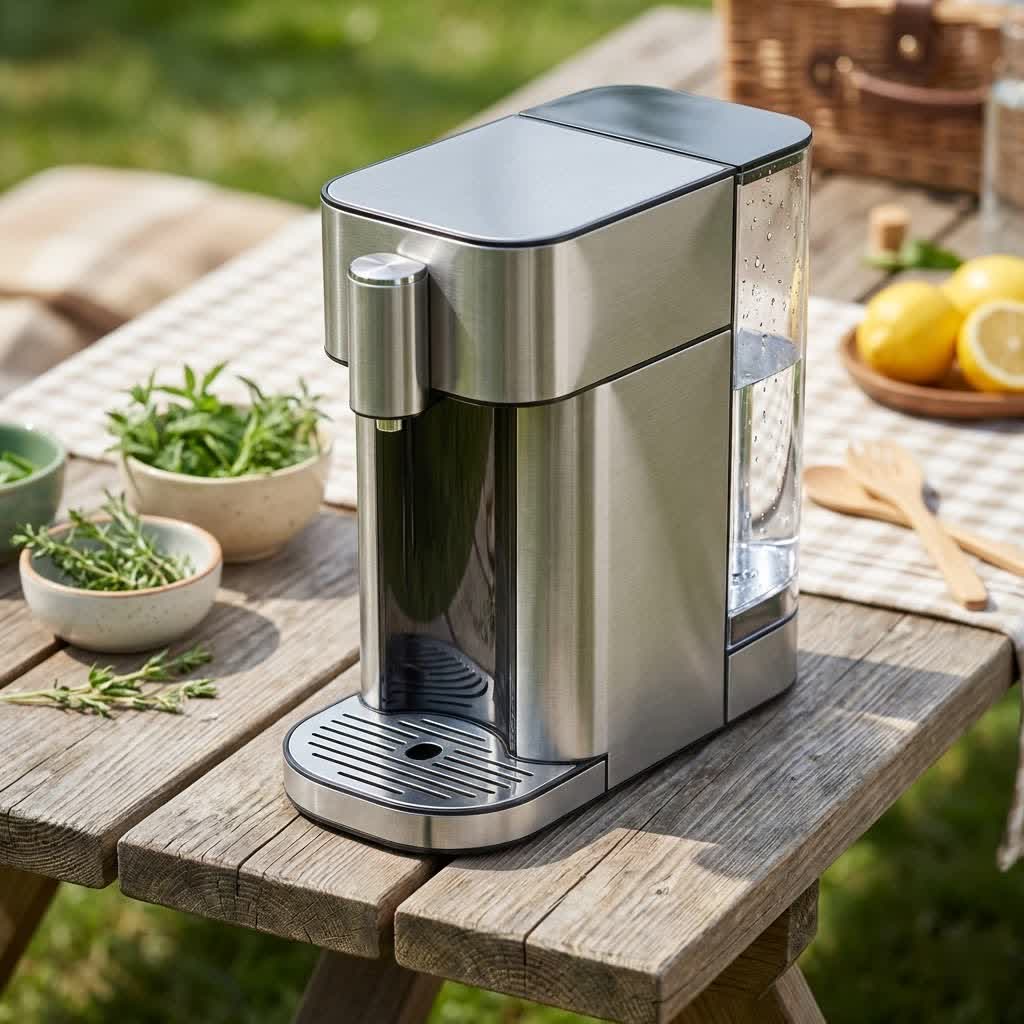
Access to clean, safe drinking water is a fundamental need, yet it remains a challenge for billions worldwide. In a world increasingly looking towards sustainable solutions, the solar water purifier emerges as a beacon of hope, offering an innovative and eco-friendly way to transform contaminated sources into potable water using the power of the sun. Whether you’re preparing for off-grid living, looking for emergency solutions, or simply aiming for a greener home, understanding these systems can empower you to secure a reliable source of pure water for your family. This comprehensive guide will delve into various solar purification technologies, outline key selection criteria, compare top models, and provide essential maintenance tips to ensure your system performs optimally.
Understanding Different Types of Solar Water Purifiers
Solar water purifiers leverage sunlight to eliminate contaminants, but they employ various methods to achieve this goal. Each technology has unique strengths, making it suitable for different water sources and purification needs. For see our home recommendations on this site.
Solar Distillation
Solar distillation mimics nature’s hydrologic cycle. This method involves using solar thermal energy to heat raw water until it evaporates, leaving behind impurities like salts, heavy metals, bacteria, and viruses. The purified water vapor then rises and condenses on a cooler surface, collecting as clean liquid. It’s a highly effective process, capable of purifying heavily contaminated or even brackish water, but it typically offers a slower output rate.
Solar-Powered UV Purification
Ultraviolet (UV) purification systems utilize solar panels to generate electricity, which powers UV lamps. These lamps emit UV-C light, capable of destroying the DNA of bacteria, viruses, and other microorganisms, rendering them harmless. While highly effective against biological contaminants, solar-powered UV purifiers do not remove sediment, chemicals, or dissolved solids, often requiring pre-filtration to ensure clarity for the UV light to work efficiently.
Solar Filtration Systems
These systems integrate solar energy to power pumps that push water through various filtration stages, often including sediment filters, activated carbon filters, and sometimes ultrafiltration (UF) membranes. The combination of solar power and physical filtration can effectively remove suspended solids, dirt, some chemicals, and larger microorganisms. Depending on the filter types, they might not eliminate all viruses or very fine dissolved impurities, but they are robust for general water improvement.
Other Emerging Technologies
While less common for direct domestic purification, some advanced concepts include solar electrolysis, which uses solar-generated electricity to produce disinfectants or facilitate electrochemical reactions to purify water. The H2Go Purifier, for example, is noted for killing over 99.9% of viruses, bacteria, and parasites using a solar electrolysis method. This diversity ensures that there’s a solar solution for nearly every purification challenge.
Key Criteria for Choosing a Solar Water Purifier
Selecting the right solar water purifier requires careful consideration of several factors to ensure it meets your specific needs. Understanding these criteria will help you make an informed decision and invest in a system that truly delivers.
Source Water Quality and Type of Contamination
|
Our Picks for the Best Water Purifier in 2026
As an Amazon Associate I earn from qualifying purchases.
|
||
| Num | Product | Action |
|---|---|---|
| 1 | ZeroWater 52-Cup Ready-Read 5-Stage Water Filter Pitcher Dispenser with 5-Stage 0 TDS Zero Water Filter – IAPMO Certified to Reduce Metals, Chlorine, Lead, Chromium, and Forever Chemicals PFOA/PFOS |

|
| 2 | Waken Electric C11S Reverse Osmosis Water Filtration System Countertop 180oz Water Tank 4:1 Pure to Drain 8 Stage RO Filter No Installation for Home Apartment Condo RV |
|
| 3 | 3 Stage RV Water Filter System, 0.2 Micron Taste Pure Water Filter with Compact 5 Inch for RV, 3-Stage High Flow Water Filter for RVs, Boats and Campers |
|
| 4 | Mate 3 Countertop Reverse Osmosis Water Filter System, 8 Stage Purification, 3:1 Pure to Drain, No Installation Required, Smart Sensor Water Dispensing, Reduce TDS, RO Water Purifier |
|
| 5 | AquaTru Carafe Countertop Water Purifier - Compact 4-Stage Reverse Osmosis System with Glass Carafe Removes 84 Contaminants Including Forever Chemicals, Lead & Fluoride - No Plumbing |
|
| 6 | Brita UltraMax Large Water Dispenser with 1 BritaPlus Filter, 27 Cup Capacity, Black (Package May Vary) |
|
| 7 | ZeroWater 32-Cup 5-Stage Water Filter Dispenser with Instant Read Out - 0 TDS for Improved Tap Water Taste - IAPMO Certified to Reduce Lead, Chromium, and PFOA/PFOS |
|
| 8 | Vortopt Carbon Block Water Filter for Sink Faucet,NSF/ANSI 42 Certified Faucet Water Filter,with Display & 400 Gallon Capacity. |
|
| 9 | Brita Hub Compact Instant Powerful Countertop Water Filter System, Reduces 70+ Contaminants, 9 Cup Water Reservoir, Includes 6 Month Carbon Block Filter, White, 87344 |
|
| 10 | Brita UltraMax Large Water Dispenser With Standard Filter, BPA-Free, Reduces Copper, Cadmium and Mercury Impurities, Lasts 2 Months or 40 Gallons, Includes 1 Filter, Kitchen Accessories, Large 27-Cup |
|
Before choosing a purifier, it’s crucial to identify the contaminants present in your source water. For instance, if your water has high levels of Total Dissolved Solids (TDS), salts, or heavy metals, a solar distillation unit would be most effective. If your primary concern is biological contamination like bacteria and viruses, a solar-powered UV system, often combined with filtration, would be a suitable choice. For varied impurities, a multi-stage filtration system may be necessary.
Purification Capacity and Flow Rate
The amount of purified water you need daily is a critical factor. Consider your household size, daily consumption for drinking and cooking, and any other specific uses. Some portable units produce only a few liters per day, ideal for individuals or emergencies, while larger systems can provide tens or even hundreds of gallons per charge or cycle, suitable for families or small communities.
Portability and Installation
Your intended use will dictate the required portability. Lightweight, compact models are perfect for camping, hiking, or emergency kits, offering high portability. For home use, off-grid cabins, or larger communal needs, a more robust, stationary system might be more appropriate, offering higher capacity and durability but less mobility.
Durability and Materials
Solar water purifiers, especially those intended for outdoor or emergency use, must be built to withstand harsh conditions. Look for products made with high-quality, weather-resistant materials that can endure prolonged exposure to sunlight, varying temperatures, and physical impacts. A durable design ensures longevity and reliable performance when you need it most.
Cost: Initial Investment and Maintenance
Evaluate both the upfront purchase price and the long-term maintenance costs, including filter replacements. While some systems may have a higher initial cost, their long-term operating expenses might be lower due to durable components or less frequent filter changes. Conversely, cheaper units could incur higher recurring costs for consumables.
Ease of Use and Maintenance
Consider how easy the system is to set up, operate, and maintain. Some purifiers are plug-and-play, while others require more involved installation or regular cleaning routines. A system that is intuitive to use and simple to maintain will ensure consistent access to clean water without unnecessary hassle.
Brand Reputation and Customer Reviews
Researching the manufacturer’s reputation and reading customer reviews can provide valuable insights into a product’s real-world performance, durability, and customer satisfaction. Reputable brands often offer better warranties and reliable customer support, adding a layer of trust to your investment.
Bảng So Sánh Các Máy Lọc Nước Tốt Nhất Hiện Nay (Table of Top Solar Water Purifiers)
When exploring options, several models stand out for their innovative use of solar technology and effectiveness in purification. Below is a comparison of some notable solar water purifiers:
| Product Name | Purification Method | Removes Viruses | Capacity | Portability | Price Range (Approx.) | Key Features |
|---|---|---|---|---|---|---|
| H2Go Purifier | Solar Electrolysis | Yes | 5 gal in 5 mins | High | $120+ | Fast, effective for biological contaminants |
| Aquamate Inflatable Still | Distillation | Yes | ~1.5 L/day | Very High | $350+ | Ideal for survival, remote environments, desalination |
| GoSun Flow | Filtration + Solar | Yes | 100 gal per charge | High | $250+ | Efficient solar-powered filtration for families/campers |
| Solvatten | Solar Heat + UV | Yes | 11 L per cycle | High | $140-$200 | Combines heat and UV for microbial inactivation |
| Emergency Survival Water Distiller | Distillation | Yes | ~1 gallon/hour | Medium | $600+ | Robust for off-grid homes and preppers, high output |
Note: Prices are approximate and can vary based on retailer and features.
Hướng Dẫn Mua Máy Lọc Nước (Buying Guide)
Navigating the market for a solar water purifier can feel overwhelming, but a structured approach can simplify the process. This buying guide will walk you through the steps to ensure you choose the ideal system for your clean water needs.
1. Xác Định Nhu Cầu (Determine Your Needs)
Start by clearly defining who will use the purifier and for what purpose. Consider your family size, daily water consumption, and the specific contaminants you need to remove. Are you planning for emergencies, remote living, or daily home use? Your intended application will heavily influence the type and capacity of the purifier you require. For example, a single person backpacking needs a different solution than a family living off-grid.
2. Nghiên Cứu Sản Phẩm (Research Products)
Dive into the various solar water purification technologies—distillation, UV, and filtration. Understand how each method works and its advantages and limitations. Look for reputable brands and read user reviews to get a sense of real-world performance and reliability. Pay attention to features like battery life (if applicable), ease of setup, and material quality.
3. So Sánh và Lựa Chọn (Compare and Choose)
Use the criteria discussed earlier (source water quality, capacity, portability, durability, cost, ease of use) to compare different models. Create a shortlist of options that best align with your requirements and budget. Don’t be swayed solely by price; consider the long-term value, including maintenance and filter replacement costs.
4. Mua Hàng tại Địa Chỉ Uy Tín (Purchase from Reputable Sources)
Always purchase your solar water purifier from authorized dealers, reputable retailers, or directly from the manufacturer. This ensures you receive a genuine product, benefit from warranty coverage, and have access to reliable customer service and technical support if issues arise. Avoid unofficial channels that might offer counterfeit products or lack proper after-sales support.
5. Kiểm Tra Sản Phẩm (Inspect the Product)
Upon receiving your purifier, carefully inspect the packaging and the product itself for any signs of damage during transit. Verify that all components and accessories listed in the manual are present. Check for the warranty card and ensure all documentation is in order before proceeding with installation.
6. Lắp Đặt và Sử Dụng (Install and Use)
Read the manufacturer’s instruction manual thoroughly before attempting to install or use your solar water purifier. Follow the guidelines precisely for assembly, placement, and initial operation. Proper installation is crucial for the system’s efficiency and longevity. Familiarize yourself with how to collect water, activate the purification process, and dispense clean water.
Cách Sử Dụng và Bảo Trì Máy Lọc Nước (How to Use and Maintain Your Solar Water Purifier)
To ensure your solar water purifier consistently delivers safe drinking water and enjoys a long operational life, regular usage and maintenance are paramount. Overlooking these steps can compromise both water quality and system durability.
Proper Usage for Optimal Performance
Always ensure your solar panels or distillation units receive adequate, unobstructed sunlight. Orient them correctly to maximize energy capture throughout the day. Only introduce water that is within the system’s specified input quality. For filtration systems, pre-filter heavily turbid water to prevent premature clogging of fine filters. Do not exceed the system’s stated capacity or flow rate, as this can reduce purification effectiveness and strain components.
Lịch Thay Thế Lõi Lọc Định Kỳ (Scheduled Filter Replacement)
Filters and membranes are the workhorses of any purification system and have a finite lifespan. Adhering to the manufacturer’s recommended replacement schedule is critical. For instance, UV lamps typically need annual replacement as their intensity degrades over time, even if they still appear to be glowing. Pre-filters might require monthly changes, while more advanced RO or UF membranes could last 2-3 years, but regular cleaning is also key. Timely replacement prevents contaminants from bypassing exhausted filters and maintains purification efficiency.
Cách Vệ Sinh và Bảo Trì Máy Lọc Nước (Cleaning and Maintenance Tips)
Regular cleaning and inspections can preempt many common issues.
- Solar Panels: Keep solar panels free from dust, dirt, leaves, and debris. Clean them regularly with mild soap and water using a soft cloth or sponge to maintain optimal energy absorption.
- System Components: Periodically inspect all pipes, connections, and electrical wiring (if applicable) for leaks, corrosion, or loose parts. Ensure all seals are intact.
- Tanks: Sanitize water storage tanks periodically to prevent the buildup of algae, bacteria, or biofilm. Use a food-grade disinfectant or a mild bleach solution, followed by thorough rinsing.
- Flushing: For systems with tanks or reservoirs, flush out accumulated sediment annually. This involves draining the system and refilling it with fresh water to remove any settled impurities.
- Winterization: If you live in an area prone to freezing temperatures, follow manufacturer guidelines for winterizing your system to prevent damage from expanding ice. This typically involves draining all water from the system and storing sensitive components.
> “Proactive maintenance is not just about extending the life of your solar water purifier; it’s about safeguarding the health of your family. A neglected system can become a source of contamination rather than a solution.” – Dr. Anya Sharma, Environmental Health Scientist
Conclusion
Embracing a solar water purifier is a powerful step towards ensuring access to clean, safe drinking water, regardless of your location or grid connectivity. These innovative systems harness the abundant energy of the sun, offering a sustainable, cost-effective, and environmentally friendly alternative to conventional purification methods. By understanding the different technologies available, carefully evaluating your specific needs, and committing to routine maintenance, you can select and care for a solar water purifier that reliably protects your family’s health for years to come. Isn’t it time to let the sun illuminate your path to water purity?
Câu Hỏi Thường Gặp (Frequently Asked Questions)
Can a solar water purifier remove salt from seawater?
Yes, certain types of solar water purifiers, specifically those employing solar distillation, are highly effective at removing salt and other dissolved minerals from seawater, making it safe to drink.
Is the water from a solar water purifier 100% safe to drink?
When properly chosen for the source water and maintained according to manufacturer guidelines, solar water purifiers can produce water that is safe to drink. However, no system is 100% foolproof; regular testing and maintenance are crucial.
How often do I need to replace filters in a solar water purifier?
Filter replacement frequency varies greatly by system type, water quality, and usage. UV lamps typically need replacing annually, while sediment and carbon filters might require changes every few months. Always consult your purifier’s manual.
What are the main benefits of using a solar water purifier?
The primary benefits include access to clean drinking water in off-grid or remote areas, reduced reliance on traditional energy sources, lower long-term operating costs, environmental sustainability, and enhanced preparedness for emergencies.
Can I use a solar water purifier at night or on cloudy days?
Many modern solar water purifiers incorporate batteries charged by solar panels, allowing them to operate at night or on cloudy days. Distillation units, however, rely directly on solar heat and will have reduced output without direct sunlight.
Pet products vetted on real animals
Practical specs, not advice. Unsubscribe anytime.

The guide was pretty good, especially outlining the different types of solar purifiers. I tried a basic SODIS method for a camping trip, and while it worked, it took longer than I expected for a full batch. I think I need to invest in one of the more advanced UV models for quicker results, but it’s a good starting point.
As someone trying to make my home greener, the eco-friendly aspect of these systems really appeals to me. I appreciated the breakdown of key selection criteria, which helped me understand what to look for beyond just price. It’s great to know there are sustainable options for clean water.
I was really interested in the section about emergency solutions. We live in an area prone to power outages, and having a reliable way to get clean water is crucial. The tips on maintenance were also really practical. I’m definitely considering one of the portable solar purifiers for our emergency kit.
I’ve been looking into off-grid solutions for a while, and the information on solar distillation in this guide was super helpful. I just ordered the SolAqua 500 model after reading the comparison. It’s amazing to think I can purify water just using the sun. This is a game-changer for our cabin.