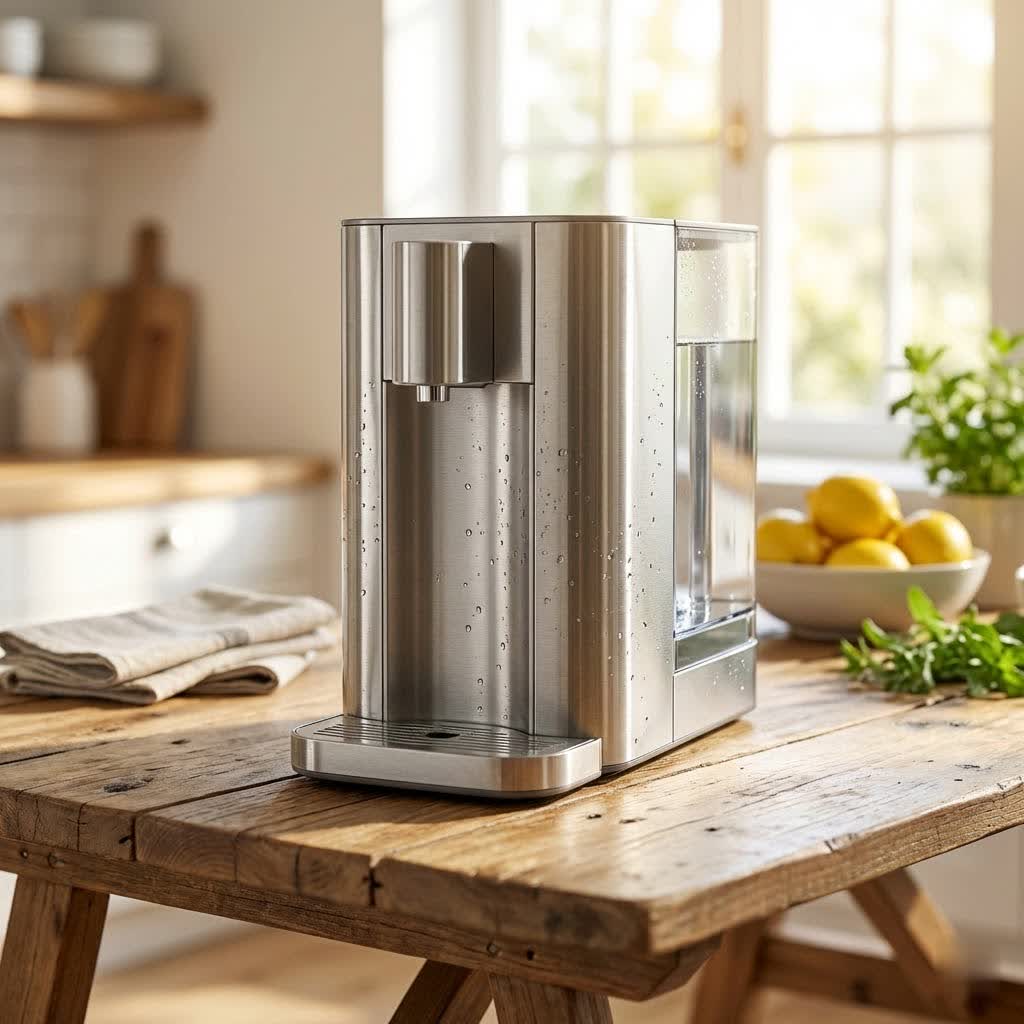
Are you tired of cluttered countertops, refilling water pitchers, or the ongoing expense of bottled water? An under counter water purifier could be the ideal solution, providing a continuous supply of clean, great-tasting water directly from your tap without sacrificing kitchen aesthetics. This comprehensive guide will navigate you through everything you need to know about these discreet yet powerful filtration systems, helping you choose, install, and maintain the perfect model for your home.
Understanding Popular Under Counter Water Purifier Types
Under counter water purifiers utilize various technologies to deliver clean water, each with distinct advantages and disadvantages. Understanding these differences is crucial for selecting the system best suited to your water quality and needs. For expert home reviews on this site.
Reverse Osmosis (RO) Systems
RO systems are renowned for their thorough purification capabilities. They force water through a semi-permeable membrane, effectively removing a vast array of contaminants, including dissolved solids (TDS), heavy metals like lead and arsenic, chlorine, fluoride, pesticides, and even microscopic organisms like viruses and bacteria. Many advanced RO systems also incorporate remineralization stages to add beneficial minerals back into the water, improving taste and health benefits. They are particularly effective for areas with hard water or high levels of dissolved impurities. However, RO systems typically have a slower flow rate and produce some wastewater, and their initial cost can be higher.
Ultrafiltration (UF) Systems
UF systems use a hollow fiber membrane with a pore size larger than RO but smaller than microfiltration. They are excellent at removing suspended solids, bacteria, viruses, and other microorganisms while generally retaining beneficial minerals. UF systems offer a higher flow rate than RO and don’t produce wastewater, making them a more eco-friendly and often more affordable option for those primarily concerned with microbial contaminants and larger particles.
Nanofiltration (NF) Systems
NF systems sit between RO and UF in terms of pore size and filtration capability. They remove most contaminants, including some dissolved solids, heavy metals, and microorganisms, but generally allow beneficial minerals to pass through. NF systems have a better flow rate and lower wastewater production compared to RO, making them a balanced choice for broad contaminant reduction with mineral retention.
Activated Carbon Filters
Activated carbon filters are highly effective at removing chlorine, chloramines, volatile organic compounds (VOCs), pesticides, herbicides, and improving water taste and odor. They achieve this through adsorption, where contaminants stick to the porous carbon surface. Often used as a pre-filter or a standalone single-stage system, activated carbon filters are generally affordable, easy to install, and offer a good flow rate, though they don’t remove dissolved solids or certain microorganisms.
UV Purifiers
|
Our Picks for the Best Water Purifier in 2026
As an Amazon Associate I earn from qualifying purchases.
|
||
| Num | Product | Action |
|---|---|---|
| 1 | 3 Stage RV Water Filter System, 0.2 Micron Taste Pure Water Filter with Compact 5 Inch for RV, 3-Stage High Flow Water Filter for RVs, Boats and Campers |

|
| 2 | Brita UltraMax Large Water Dispenser with 1 BritaPlus Filter, 27 Cup Capacity, Black (Package May Vary) |
|
| 3 | ZeroWater 32-Cup 5-Stage Water Filter Dispenser with Instant Read Out - 0 TDS for Improved Tap Water Taste - IAPMO Certified to Reduce Lead, Chromium, and PFOA/PFOS |
|
| 4 | Brita Hub Compact Instant Powerful Countertop Water Filter System, Reduces 70+ Contaminants, 9 Cup Water Reservoir, Includes 6 Month Carbon Block Filter, White, 87344 |
|
| 5 | Vortopt Carbon Block Water Filter for Sink Faucet,NSF/ANSI 42 Certified Faucet Water Filter,with Display & 400 Gallon Capacity. |
|
| 6 | AquaTru Carafe Countertop Water Purifier - Compact 4-Stage Reverse Osmosis System with Glass Carafe Removes 84 Contaminants Including Forever Chemicals, Lead & Fluoride - No Plumbing |
|
| 7 | ZeroWater 52-Cup Ready-Read 5-Stage Water Filter Pitcher Dispenser with 5-Stage 0 TDS Zero Water Filter – IAPMO Certified to Reduce Metals, Chlorine, Lead, Chromium, and Forever Chemicals PFOA/PFOS |
|
| 8 | Brita UltraMax Large Water Dispenser With Standard Filter, BPA-Free, Reduces Copper, Cadmium and Mercury Impurities, Lasts 2 Months or 40 Gallons, Includes 1 Filter, Kitchen Accessories, Large 27-Cup |
|
| 9 | Mate 3 Countertop Reverse Osmosis Water Filter System, 8 Stage Purification, 3:1 Pure to Drain, No Installation Required, Smart Sensor Water Dispensing, Reduce TDS, RO Water Purifier |
|
| 10 | Waken Electric C11S Reverse Osmosis Water Filtration System Countertop 180oz Water Tank 4:1 Pure to Drain 8 Stage RO Filter No Installation for Home Apartment Condo RV |
|
Ultraviolet (UV) purifiers use UV light to sterilize water by inactivating bacteria, viruses, and other pathogens. They are highly effective against microbiological contaminants but do not remove physical particles, chemicals, or dissolved solids. UV purification is often combined with other filtration methods, like carbon filters, to provide comprehensive water treatment.
Key Criteria for Choosing an Under Counter Water Purifier
Selecting the right under counter water purifier involves evaluating several factors to ensure it meets your specific requirements for water quality, performance, and budget.
Source Water Quality and Contaminant Removal
The most critical factor is understanding what’s in your water. If you use city water, your local Consumer Confidence Report (CCR) will detail detected contaminants. For well water, professional testing is essential. Once you know your specific contaminants, you can choose a technology that targets them effectively. For example, RO is ideal for comprehensive removal of heavy metals, fluoride, and dissolved solids, while a multi-stage carbon filter excels at removing chlorine, improving taste, and tackling PFAS.
Filtration Technology and Certification
Different technologies target different impurities. Reverse Osmosis (RO) offers the most comprehensive purification, removing up to 99% of contaminants, including lead, arsenic, and PFAS. Other multi-stage filters, often featuring activated carbon and ion exchange, are highly effective against chlorine, lead, and various chemicals. Look for independent certifications like NSF/ANSI standards (e.g., NSF 42 for aesthetic contaminants like chlorine, NSF 53 for health contaminants like lead, and NSF 58 for RO systems’ TDS reduction) to verify performance claims.
Filtration Capacity and Flow Rate
Consider your household’s daily water consumption. Filtration capacity, measured in gallons per day (GPD) for RO systems, indicates how much purified water the unit can produce. Flow rate refers to how quickly water dispenses from the faucet. Tankless RO systems, like the Waterdrop G3P600, often boast faster flow rates compared to traditional tank-based RO systems. Non-RO filters generally offer a higher flow rate, which might be a priority for busy kitchens.
System Size and Installation Requirements
Under counter units are designed for discreet placement, but their footprint varies. Tank-based RO systems require space for a storage tank, while tankless models are more compact. Assess the available space under your sink. Installation typically involves connecting to the cold water line and potentially drilling a hole for a dedicated filtered water faucet. While many systems are DIY-friendly, professional installation might be advisable, especially for drilling into granite or stone countertops.
Maintenance and Filter Replacement Costs
Evaluate the long-term cost of ownership, which includes replacement filters and membranes. Filter lifespan varies by type and usage; some systems require filter changes every 6-12 months, while RO membranes might last 2-4 years. Factor in the cost and ease of replacing these components. Some brands offer subscription services for filter replacements, simplifying maintenance.
Brand Reputation and Warranty
Choose a reputable brand known for quality and customer service. A strong warranty provides peace of mind regarding potential defects or issues. Reading user reviews and expert ratings can also offer valuable insights into a product’s reliability and performance.
Top-Rated Under Counter Water Purifiers Today
Many excellent under counter water purifiers are available, each excelling in different aspects. Here’s a comparison of some highly-rated models, based on recent expert testing and user feedback:
| Feature | Cloud RO (Overall Best) | Waterdrop G3P600/G3P800 (Best Tankless RO) | Aquasana 3-Stage Max Flow Claryum (Best Multi-Stage) | APEC ROES-50 Essence Series (Excellent Value RO) | Brondell H2O+ Coral UC300 (Easy Install, Great Taste) | Frizzlife MK99 (Best Budget) |
|---|---|---|---|---|---|---|
| Technology | Reverse Osmosis (RO) with remineralization | Tankless Reverse Osmosis (RO) | 3-Stage (Claryum, activated carbon, ion exchange) | 5-Stage Reverse Osmosis (RO) | 3-Stage (Sediment, Carbon Block, Ultrafiltration) | 2-Stage (Sediment, Carbon Block) |
| Contaminants | Comprehensive (TDS, heavy metals, chlorine, viruses, bacteria, PFAS) | Broad (TDS by 85%, PFAS, microplastics, lead, chlorine) | Superb (PFAS, lead, chlorine, cysts, chemicals, preserves minerals) | Nearly perfect (TDS, heavy metals, chemicals, etc.) | High contaminant reduction, taste & smell improvement | Chlorine, lead, taste, odor |
| Certifications | NSF 58 for TDS reduction, additional NSF test data | NSF certified for various contaminants | NSF 42, 53, 401, P473 | NSF 58, WQA Gold Seal | NSF 42, 53 | NSF 42, 53 |
| Flow Rate | Fast faucet flow | Very fast, tankless design | Excellent flow | Good | Good | Fast |
| Special Features | Remineralization, smart app monitoring, excellent waste water ratio | Tankless, compact, water-saving | Retains healthy minerals, easy installation | Reliable, comprehensive | Easy DIY installation, improved taste | Compact, quick filter change |
| Pros | Top performance, high quality, robust filtration | Space-saving, efficient, superior purification | Excellent contaminant removal, mineral retention, easy to install | High performance, lower long-term costs | Significantly improves taste and smell, easy to install | Affordable, good basic filtration for common issues |
| Cons | Not a budget pick | Higher upfront cost | Takes up cabinet space, higher filter replacement costs | Requires tank, slower flow | Limited against very high TDS | Shorter filter life than some, less comprehensive |
“Choosing the right under-sink filter often comes down to balancing comprehensive contaminant removal with factors like flow rate and system footprint. For municipal water, a robust multi-stage filter might suffice, but for well water or specific concerns like fluoride or high TDS, a certified RO system is usually the safest bet.” – Expert Name, Water Filtration Specialist
Your Comprehensive Buying Guide for Under Counter Water Purifiers
Navigating the market for an under counter water purifier can be daunting. Follow these steps to make an informed decision and ensure you get the best system for your home.
-
Assess Your Needs:
- Household Size: A larger household will need a system with higher capacity or faster flow rate.
- Water Usage: Consider how much filtered water you’ll use daily for drinking, cooking, and washing produce.
- Budget: Determine your budget for both the initial purchase and ongoing filter replacements. High-performance systems often have higher upfront costs but can save money on bottled water in the long run.
-
Test Your Water Source:
- For municipal water, review your local water utility’s annual Consumer Confidence Report (CCR) to understand what contaminants are present.
- For well water, conduct a comprehensive water test through a state-certified laboratory. This is crucial for identifying specific contaminants like heavy metals, bacteria, or excess minerals that might not be present in city water. Knowing your water quality is the foundation of choosing the right filtration technology.
-
Research and Compare Products:
- Filtration Technology: Based on your water test results, decide which technology (RO, UF, NF, carbon, UV, or a combination) is best for your needs. RO offers the broadest contaminant removal, while multi-stage non-RO filters are excellent for taste, odor, and common chemicals.
- Certifications: Prioritize systems with third-party certifications (e.g., NSF/ANSI 42, 53, 58) as these validate performance claims and ensure safety.
- Performance Metrics: Compare flow rates, filter lifespans, and contaminant reduction percentages.
- Features: Look for features like remineralization (especially with RO), smart indicators for filter changes, and compact designs.
-
Consider Installation and Maintenance:
- DIY vs. Professional: Many under counter systems are designed for DIY installation, especially non-RO filters. RO systems might be more complex due to multiple stages and a storage tank. If your sink or countertop requires drilling into hard materials like granite, professional help may be necessary.
- Ease of Filter Change: Some systems feature twist-off filter housings or quick-connect cartridges for easy, tool-free replacement.
- Maintenance Schedule: Understand the recommended filter replacement schedule and factor in the time and cost involved.
-
Purchase from Reputable Retailers:
- Buy your under counter water purifier from authorized dealers, reputable appliance stores, or trusted online platforms. This ensures you receive genuine products and valid warranties.
- Verify the product includes all necessary accessories and a warranty card before completing your purchase.
-
Review Warranty and Support:
- Understand the warranty terms, including what is covered and for how long.
- Check for accessible customer support for troubleshooting and replacement parts.
By carefully following these steps, you can confidently select an under counter water purifier that delivers clean, safe, and delicious water to your home for years to come.
Proper Use and Maintenance of Your Under Counter Water Purifier
Ensuring the longevity and optimal performance of your under counter water purifier requires diligent use and regular maintenance. By following a few simple steps, you can guarantee a consistent supply of clean water and extend the life of your system.
Operating Your Purifier Correctly
- Initial Flush: After installation or filter replacement, always flush the system by running water through the filtered faucet for at least 10-15 minutes. This purges air from the lines and removes any loose carbon fines from new cartridges.
- Cold Water Only: Under counter water purifiers are designed to filter cold water. Never run hot water through the system, as this can damage the filter media and system components.
- Dedicated Faucet: Use the dedicated filtered water faucet for drinking and cooking to maximize filter life and ensure optimal purification.
Scheduled Filter Replacement
The most crucial maintenance task is timely filter replacement. The frequency depends on the filter type, your water quality, and usage volume.
- Multi-Stage Filters: Generally, these require filter changes every 6-12 months.
- RO Systems: Pre-filters and post-filters typically need replacement every 6-12 months, while the RO membrane usually lasts 2-4 years.
- Monitor Performance: Pay attention to a decrease in water flow, changes in taste or odor, or rising TDS readings (if you test your water) as these are clear indicators that filters need changing. Ignoring these signs can lead to reduced water quality and potential system damage.
Cleaning and Inspection
- Housing Cleaning: When replacing filters, thoroughly clean the filter housings with warm, soapy water and a soft brush or sponge. Rinse them completely to remove any dirt, debris, or biofilm accumulation.
- O-Ring Inspection: Inspect the O-rings (rubber seals) in the filter housings for cracks, brittleness, or damage. Lubricate them with food-grade silicone grease to maintain a tight seal and prevent leaks. Replace any worn or damaged O-rings.
- Leak Checks: Periodically check all connections, fittings, and tubing for any signs of leaks. Tighten any loose connections immediately. Monthly 5-minute checks are recommended for RO systems.
- RO System Sanitization: For Reverse Osmosis systems, an annual sanitization is recommended. This involves turning off the water, adding a mild bleach solution (1 tablespoon unscented bleach per gallon of water) to the system, letting it sit for about an hour, and then flushing it thoroughly until the bleach smell is completely gone.
Troubleshooting Common Issues
- Slow Water Flow: Often indicates a clogged filter cartridge needing replacement, or sediment build-up in the housing.
- Unpleasant Taste or Odor: Usually a sign that the carbon filters are exhausted and require replacement.
- Continuous Running (RO Systems): Could mean the storage tank isn’t full, or the auto shut-off valve needs replacement.
- Leaks: Check and tighten all connections. If leaks persist, replacing O-rings often solves the problem.
“Regular maintenance isn’t just about prolonging the life of your purifier; it’s about consistently ensuring the water you drink is as pure and safe as possible. Think of it as a small investment of time for a significant return on your family’s health.”
Conclusion
Investing in an under counter water purifier is a wise decision for any household seeking a convenient, space-saving, and effective way to enjoy clean, pure water. From advanced Reverse Osmosis systems to efficient multi-stage filters, the market offers a diverse range of technologies to address virtually any water quality concern. By carefully assessing your needs, understanding the available options, and committing to a routine maintenance schedule, you can ensure a continuous supply of healthy, great-tasting water right from your tap.
Isn’t it time to upgrade your home with the unparalleled convenience and peace of mind an under counter water purifier provides?
Frequently Asked Questions
What are the main benefits of an under counter water purifier?
Under counter water purifiers provide clean, filtered water on demand without taking up valuable counter space. They reduce reliance on expensive bottled water, improve the taste and smell of tap water, and remove various contaminants, contributing to better health and convenience.
How often should I replace the filters in my under counter water purifier?
Filter replacement schedules vary by system type and usage. Generally, multi-stage filters should be replaced every 6-12 months, while RO system pre/post-filters are changed every 6-12 months, and the RO membrane every 2-4 years. Always consult your specific model’s manual for precise recommendations.
Can I install an under counter water purifier myself?
Many under counter water purifiers are designed for DIY installation, especially if you have basic plumbing skills and an existing hole for a dedicated faucet. However, drilling into stone countertops or complex RO systems might require professional assistance. Always follow the manufacturer’s instructions carefully.
Do under counter water purifiers remove beneficial minerals from water?
Reverse Osmosis (RO) systems remove nearly all dissolved solids, including beneficial minerals. However, many modern RO systems include a remineralization stage that reintroduces healthy minerals back into the filtered water to improve taste and nutritional value. Other filtration types, like Ultrafiltration, often retain natural minerals.
How do I know if my under counter water purifier is working correctly?
Signs of proper functioning include consistent water flow, clean taste and odor, and the absence of leaks. For RO systems, you might use a TDS meter to check that dissolved solids are significantly reduced (e.g., 90% lower than tap water). Any noticeable decline in water quality or flow indicates it’s time for maintenance or filter replacement.
Pet products vetted on real animals
Practical specs, not advice. Unsubscribe anytime.

I was hesitant about the cost of a good reverse osmosis system, but after reading up on how thorough they are, I decided to go for it. My family drinks a lot of water, and the peace of mind knowing it’s super pure is great. The only minor downside is the slower flow rate compared to our old faucet, but it’s a small trade-off for the quality.
I finally pulled the trigger on an under counter system after years of dealing with a bulky pitcher taking up fridge space. The difference is night and day! Our tap water tastes so much better now, and it’s amazing to have clean water on demand without any countertop clutter. Installation was a bit tricky for me, but totally worth it.
We got a basic under counter filter, not an RO system, and while it’s definitely an improvement over straight tap water, I still notice a slight chlorine taste sometimes. It’s not bad enough to return it, but I was hoping for a completely neutral flavor. Next time I might invest in a more advanced system.
This is exactly what I needed! I was so tired of buying bottled water and feeling guilty about the plastic. Our new under counter purifier has made such a difference. The water tastes fantastic, and it’s so convenient to just turn on the tap. My coffee even tastes better now!